

Seller resources · By Amoni Capital
Published
Two Closings, One Dallas Home Sale
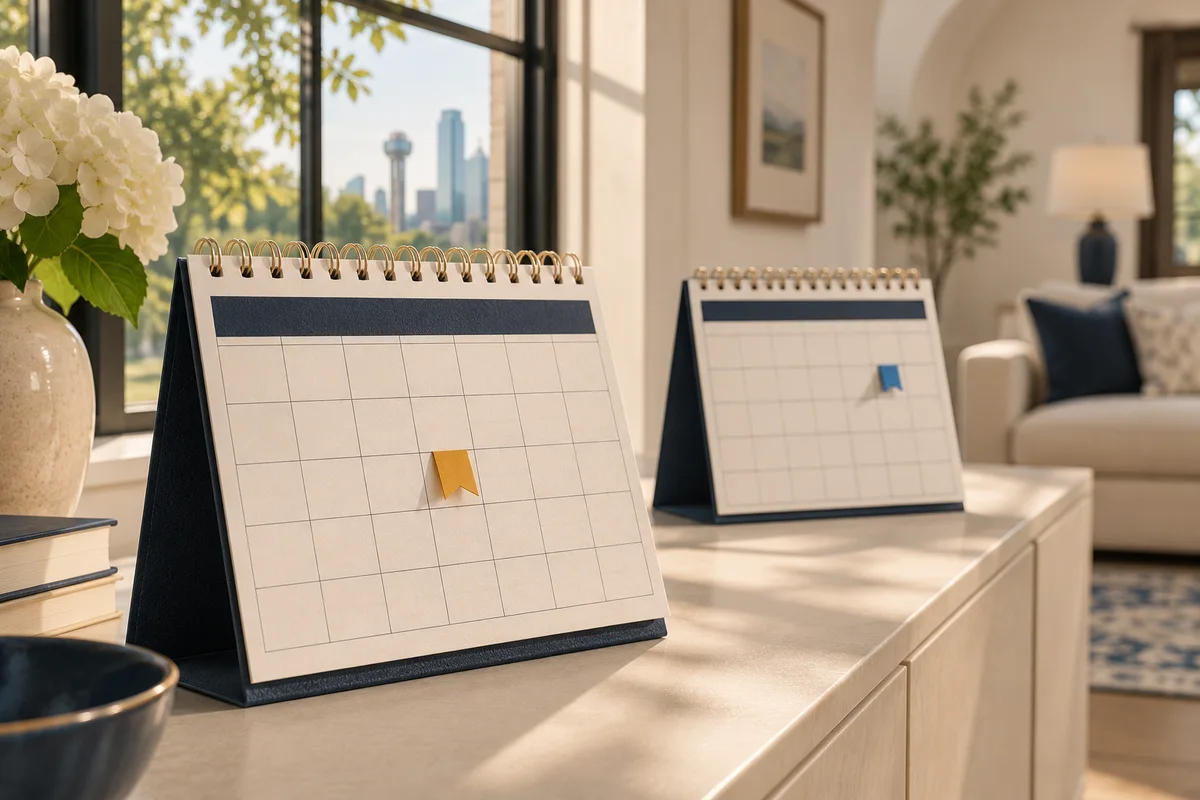
Worked example. November 19: the buyer expects money from selling their home. November 20: the offer says that money must arrive by this date. That leaves one calendar day between the two. If the first sale slips, the dates can stop lining up. This is a made-up example, not a suggested schedule.
A buyer home-sale contingency is a condition tied to the buyer’s own sale. In TREC Form 10-6, the condition is that the buyer receives the sale money by the date in Paragraph A. A listed home, a signed contract, and money received are three different things.
Put the two dates side by side
Use the buyer’s expected date for receiving their sale money, not just the date they plan to sign papers. For the other date, use the proposed or signed Paragraph A date if your offer uses Form 10-6. Ask your agent which line to use if the wording differs.
Buyer sale timing check
Calendar comparison only. This tool does not calculate a contract or notice deadline, check delivery, or verify receipt of money. Dates stay on this page and clear when you reload.
Add both dates to compare their order.
Three lines to read before you sign
Paragraph A: the date tied to the buyer’s sale. The form says this date should be no later than the closing date in Paragraph 9 of the purchase contract. Under Paragraph A, if the condition is neither met nor waived by its date, the form provides for automatic termination and return of earnest money to the buyer. Read the actual signed papers and any amendments before drawing a conclusion.
Paragraph B: what happens if you accept another written offer. This paragraph calls for notice to the first buyer of both the accepted offer and the seller’s requirement to waive the condition. The response time is filled in on the form. A showing, an inquiry, or a verbal offer is not the accepted written offer described here.
Paragraph C: what counts as giving up the condition. The form requires written notice of the waiver and the additional earnest money stated in that paragraph to be deposited with escrow. Notices and waivers take effect when delivered as the contract requires. Do not treat a text saying “we’re good” as a completed waiver.
Ask for a clear status update on the buyer’s sale. Is their home listed? Is it under contract? What could still delay the money? Who will confirm when it is received? Ask your agent for the facts you need, without asking the buyer to send bank details.
The two notices go to different buyers
First buyer: a request to waive the condition
If the first contract is still in place, have your agent or Texas real estate attorney review the proper back-up paperwork and notice sequence before accepting another offer. The notice in Form 10-6 Paragraph B goes to the first buyer. It does not by itself end that contract.
Back-up buyer: notice after the first contract ends
TREC’s current back-up addendum, Form 11-9, makes the second contract depend on the first ending. Under Paragraph H, the back-up contract’s effective date for performance changes to the date the seller delivers notice that the first contract has ended. An amendment to the first contract does not end it under Paragraph I.
TREC Form 62-0 is a notice to the back-up buyer after the first contract ends. It is separate from the waiver request sent to the first buyer. Ask your agent or attorney which notice applies and how delivery is documented.
If you already signed, check status before changing course
Ask your agent or a Texas real estate attorney to read the signed contract, addenda, amendments, and notices together. Have them confirm which contract is active before you sign with another buyer. The date comparison above does not tell you whether you can cancel, keep a deposit, or accept another offer.
If a waiver was made but the first buyer does not close and fund solely because their own sale money did not arrive, Form 10-6 Paragraph D describes that as a default and points to the contract’s remedies. That is different from the condition expiring without a waiver. A lawyer can help you assess the signed papers and facts.
If the first deal has ended, our guide to a buyer backing out helps you organize what to check before going back on the market.
Compare the dates and terms you would actually sign
If you’re free to consider offers, compare the written price, the proposed closing date, and which events still need to happen. See our cash offer versus listing guide for the broader tradeoffs. Give your agent or attorney the two dates you compared and ask what happens if either changes.
Amoni may act as a buyer for its own account. A review is optional and does not guarantee an offer or a closing date. See Amoni’s terms and compare any written offer independently.
Compare OptionsThis guide explains the named Texas forms for general education. Your signed papers and qualified advice govern your transaction.