

Seller resources · By Amoni Capital
Published
Selling a House With Mold in Dallas: Remediate or Sell As-Is?
Finding mold while planning to sell can create several decisions. Do you need testing? Should you fix the moisture source first? Will previous work need to be documented?
Start with three facts: Where is the moisture coming from? How large or complicated is the affected area? What mold-related records already exist?
Once you know those facts, you can compare remediation, listing in the home's current condition and a direct as-is sale without guessing.
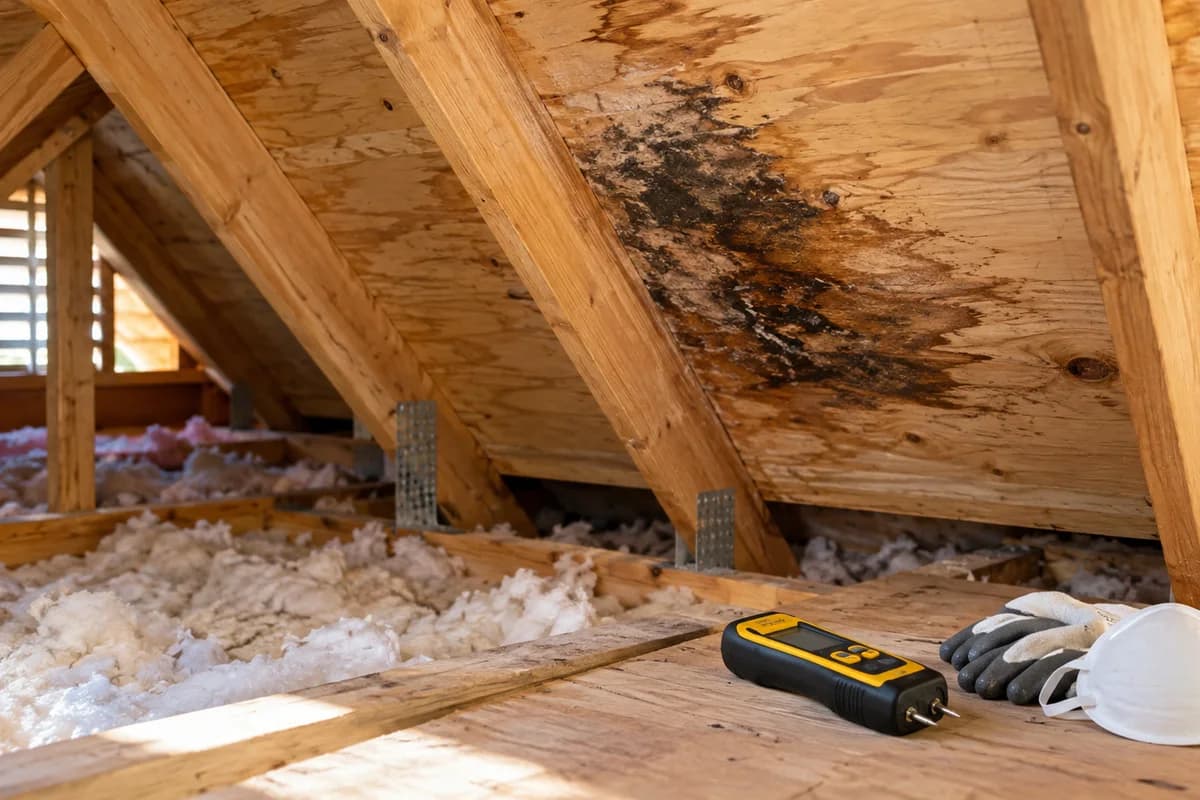
First, fix the moisture question
Mold grows when materials stay wet or damp. Cleaning visible mold without fixing the moisture problem can allow it to return.
EPA says moisture control is the key to mold control. TDLR likewise explains that correcting a mold problem requires fixing the underlying moisture problem, removing the mold and keeping the property dry. EPA cleanup guidance · TDLR mold FAQ.
The source may be a plumbing or roof leak, HVAC or condensate problem, water intrusion, flooding, or moisture behind walls, floors or cabinets. If the source or scope is unclear, use an appropriately qualified professional.
Texas mold rules at a glance
| Number | What it actually means |
|---|---|
| About 10 sq. ft. | EPA says many small mold areas can be handled by a homeowner, with important exceptions. This is cleanup guidance—not a Texas licensing threshold. |
| 25 contiguous sq. ft. | TDLR says a remediation notification is required when contamination affects at least this area and remediation will be conducted. This is not a health threshold, and Texas exemptions may apply. |
| 5 years | When an owner sells property, Texas Occupations Code §1958.154 requires the owner to give the buyer a copy of each certificate issued under that section during the five years before the sale. |
On a small screen, scroll the table sideways to read both columns.
These numbers answer different questions. EPA's roughly 10-square-foot guidance should not be used to reinterpret Texas's 25-square-foot notification rule. TDLR notification requirements · Texas Occupations Code Chapter 1958.
Texas also has conditional exemptions. TDLR says an owner or manager of residential property generally does not need a license for work on that property unless it has 10 or more dwelling units. The non-residential owner or tenant exemption does not apply when contamination affects at least 25 contiguous square feet. A licensed remediator must still follow the rules even on a smaller project, although TDLR says no notification is required for that smaller project. Verify the rule that fits the actual property and person doing the work.
Build your mold sale checklist
This browser-only tool organizes questions. It does not diagnose mold, decide whether remediation is legally required or tell you which selling path to choose.
Mold Sale Prep Check
Answer four quick questions. Your choices stay in this browser and are not submitted.
Before comparing sale options
- Confirm where the moisture came from.
- Confirm whether the moisture source still needs repair.
- Verify which current Texas rules apply before starting remediation.
- Gather any scope, estimate, invoice, photo or prior certificate you already have.
This tool does not diagnose mold, assess health risk, decide legal compliance or recommend a selling path.
Three selling paths to compare
| Path | What it may involve | Main tradeoff |
|---|---|---|
| Remediate, then list | Correct the moisture source, complete appropriate work and organize the records. | More upfront work and expense; completed work may reduce buyer uncertainty. |
| List in current condition | Market the property while accurately addressing its known condition and records. | Condition may affect inspections, negotiations, buyer requirements and financing. |
| Compare a direct as-is sale | Let a buyer evaluate the property in its present condition. | Less preparation may be required, but an offer can reflect remediation and transaction risk. |
There is no universally correct path. A small, understood problem with a clear scope is different from hidden moisture across several rooms or an unresolved project.
If you already had professional remediation
Keep assessments, protocols, contracts, certificates, invoices and photographs. Licensed work may produce a Certificate of Mold Remediation when the requirements are satisfied.
Texas Occupations Code §1958.154 says that when a property owner sells property, the owner shall provide the buyer a copy of each certificate issued for the property under that section during the five years before the sale. Keep qualifying certificates with the property records rather than discarding them after the work is complete. Read §1958.154.
Does every mold problem require professional remediation?
No single rule applies to every situation. EPA says that, in many cases, a moldy area smaller than about 10 square feet can be handled by the homeowner. It recommends professional guidance for extensive water damage, larger growth, contaminated water, HVAC contamination or health concerns.
Texas separately regulates mold assessment and remediation while providing conditional minimum-area, residential-property and facility exemptions. Do not choose a contractor or DIY approach based only on a number from an article.
Can you sell without remediating first?
Mold does not automatically establish that remediation must be finished before you explore a sale. The property, buyer, financing, inspections, title, contract terms and applicable disclosures all matter.
As-is does not erase obligations that otherwise apply. For many qualifying previously occupied single-family residential sales, the current TREC Seller's Disclosure Notice is used to address information required under Texas Property Code §5.008. Applicability and exemptions vary. Use transaction-specific legal or real-estate guidance if you are unsure. TREC Seller's Disclosure Notice. Amoni's selling as-is guide explains the broader process.
Compare the numbers without inventing repair costs
A real estimate may include the moisture-source repair, assessment, remediation, removal of damaged materials, rebuilding, ownership costs and normal selling expenses. Online averages cannot price your property.
Use actual estimates in Amoni's Home Sale Calculator. The major-repairs guide can help you decide which estimates would meaningfully change the decision.
A simple decision process
- 1
Identify the moisture source.
- 2
Understand the visible and possible hidden scope.
- 3
Gather assessments, protocols, certificates, invoices and photos.
- 4
Get property-specific estimates only when they would change your decision.
- 5
Compare realistic proceeds, work, timing and uncertainty.
- 6
Read the complete written transaction before signing.
Free DFW Home Sale Options Review
Want to compare selling before you remediate?
Amoni's review compares selling directly as-is, listing as-is and completing work first. It is free and has no obligation. It is not a mold assessment, appraisal, remediation estimate, legal opinion or automatic offer. Not every property qualifies for a direct offer.
Review my selling optionsFrequently asked questions
Can I sell a Dallas house that has mold?
You can explore selling paths without assuming remediation must be completed first. The practical answer depends on condition, the buyer, financing, applicable disclosures, documentation and the written contract.
Do I need mold testing before selling?
Not automatically. TDLR says testing to identify the kind of mold is not required before remediation or cleaning. If you hire someone for regulated mold assessment, verify the applicable licensing requirements.
Is 25 square feet the rule for whether mold is dangerous?
No. The Texas 25-contiguous-square-foot threshold concerns remediation regulation and notification. It is not a health or safety cutoff. EPA’s separate roughly 10-square-foot guidance addresses small cleanup decisions.
Should I remediate before requesting a cash offer?
You do not need to spend money first simply to compare an as-is option. Existing estimates and records may help a buyer understand the property, but an evaluation is not a guaranteed offer.
What if mold was professionally remediated several years ago?
Keep the documentation. Section 1958.154 requires an owner who sells property to give the buyer copies of certificates issued under that section during the five years before the sale.