

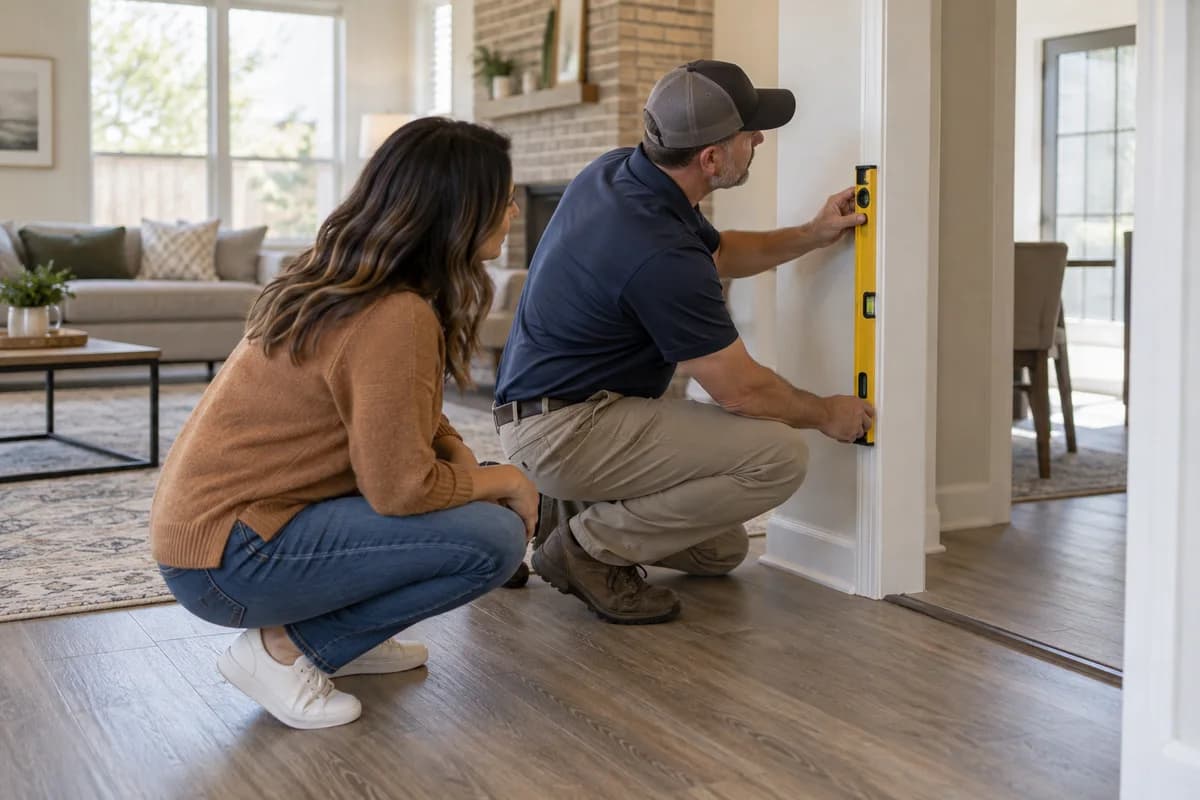
1. Start with the seller's disclosure and repair history
For transactions where the current TREC Seller's Disclosure Notice applies, the form asks whether the seller is aware of known defects or malfunctions in the Foundation/Slab(s).
It also separately asks about previous structural or roof repair and landfill, settling, soil movement, or fault lines. The current form is TREC 55-1, effective May 28, 2026.
A seller's disclosure is useful, but the form itself says it is not a substitute for inspections or warranties.
Source: TREC Seller's Disclosure Notice
Ask for documents, not only a verbal history
If the property has prior foundation work, ask for whatever actually exists: prior inspection or engineering reports; repair proposals and invoices; pier or repair layouts; warranty documents and transfer requirements; relevant plumbing or drainage reports; and later reports showing what happened after repair.
A prior repair is not automatically good or bad. The documents help you understand what was found, what was done, and what remains unknown.
2. Read the inspector's foundation opinion
Under TREC §535.228, the inspector must render a written opinion as to the performance of the foundation.
The inspector also generally reports present and visible indicators used to form an adverse-performance opinion, including binding or non-latching doors, sloping floors, wall/floor/ceiling/window cracks or separations, and certain masonry movement.
Do not reduce the inspection to one crack. Read the foundation opinion, the observations behind it, and the recommendations together.
Source: TREC inspection standards, §535.228
3. Know what the standard inspection does not promise
TREC's guidance says the minimum inspection is visual. The minimum standard does not require elevation-measurement tools, ground-penetrating radar, thermal imaging, or load/deflection testing.
TREC also explains that a real-estate inspection is limited, not a comprehensive investigation. Buyers should read the full report and follow up on recommendations when additional evaluation is needed.
Sources: TREC foundation-performance guide and TREC inspection guidance.
Browser-only planning tool
Foundation Buyer Due-Diligence Check
Choose what you know. Your selections stay in this browser and are not submitted to Amoni.
Your next-step checklist
Answer the questions to identify missing due-diligence steps.
This educational checklist does not diagnose the foundation, determine safety, estimate repairs, decide financing eligibility, or recommend whether to buy.
4. Use your option period deliberately
TREC says the termination option is a negotiable contract term. When a buyer has paid the agreed option fee and has the contractual option right, the buyer can use the option period to inspect the property and negotiate an amendment for repairs discovered through inspection.
Your signed contract controls your rights and deadlines. Schedule important due diligence early enough that you have time to read the results—not just receive them.
Source: TREC option-period FAQ
5. Follow the report instead of using a universal rule
If the inspector reports adverse performance or recommends additional evaluation, consider the qualified follow-up that fits the issue. That might involve a professional engineer or another appropriate specialist, depending on what the report says.
Do not assume every crack means structural failure, every repaired foundation needs new work, a repair company's free estimate equals an independent professional opinion, or every concern requires the same specialist. Close the information gap that matters to this property.
6. Price the known work with actual bids
Avoid generic Dallas repair ranges. Foundation type, access, drainage, plumbing, prior work, number and type of supports, and the actual scope can materially change a project. Use written property-specific estimates for work that could affect your decision.
| Information | Better input |
|---|---|
| Repair cost | Written bid tied to the property |
| Prior work | Invoice, report and warranty |
| Current performance | Inspection plus qualified follow-up if recommended |
| Financing or insurance | Ask the professional reviewing the actual property and transaction |
7. Keep the mortgage decision separate from the repair decision
A lower purchase price does not automatically make a property affordable after repairs. Use Amoni's Mortgage Calculator with your own financing assumptions, then keep the foundation and other repair budget beside it. The calculator is not a loan quote or approval.
8. Compare the information you have—not a generic rule
| Situation | Sensible next question |
|---|---|
| Prior repair, but records are missing | Can the seller provide reports, invoices and warranty details? |
| Inspection notes adverse performance | What qualified follow-up and written scope would reduce uncertainty? |
| Warranty exists | Is it valid and transferable, and on what terms? |
| Cost is uncertain | Can you get a written property-specific estimate before the deadline? |
This table does not recommend buying or walking away. It identifies the next missing fact.
9. A simple Dallas buyer process
- Read the seller disclosure.
- Gather prior foundation and structural-repair records.
- Complete the home inspection.
- Read the written foundation-performance opinion.
- Follow up on important recommendations.
- Get written bids for decision-changing work.
- Verify financing or insurance questions where relevant.
- Review contract rights and deadlines with the appropriate professionals.
- Decide using property-specific facts, not a generic Dallas number.
Looking for value-add properties?
Amoni Capital may make DFW properties available to buyers and investors. Review available opportunities or join the buyers list.
Property information is for evaluation purposes. Buyers remain responsible for inspections, title review, repair estimates, financing review and other due diligence.
FAQs
Does a Dallas home inspector have to inspect the foundation?
For an inspection subject to TREC's residential Standards of Practice, §535.228 requires a written opinion regarding foundation performance and specified observations or deficiencies.
Does an inspector have to take elevation measurements?
No. TREC says specialized equipment and elevation measurements are not required by the minimum standard.
Does every foundation concern require a structural engineer?
No universal rule fits every property. Follow the inspection findings and recommendations with a qualified professional appropriate to the issue.
Should I trust a transferable foundation warranty?
Verify the actual terms, validity, coverage, exclusions, transfer requirements and any required fee or inspection.
How much should I budget for foundation repair in Dallas?
Use property-specific written estimates rather than a generic DFW range.
Can I use the option period for foundation due diligence?
TREC says a buyer with the contractual option right can use the period for inspection and repair negotiations. Your signed contract controls your rights and timing.