

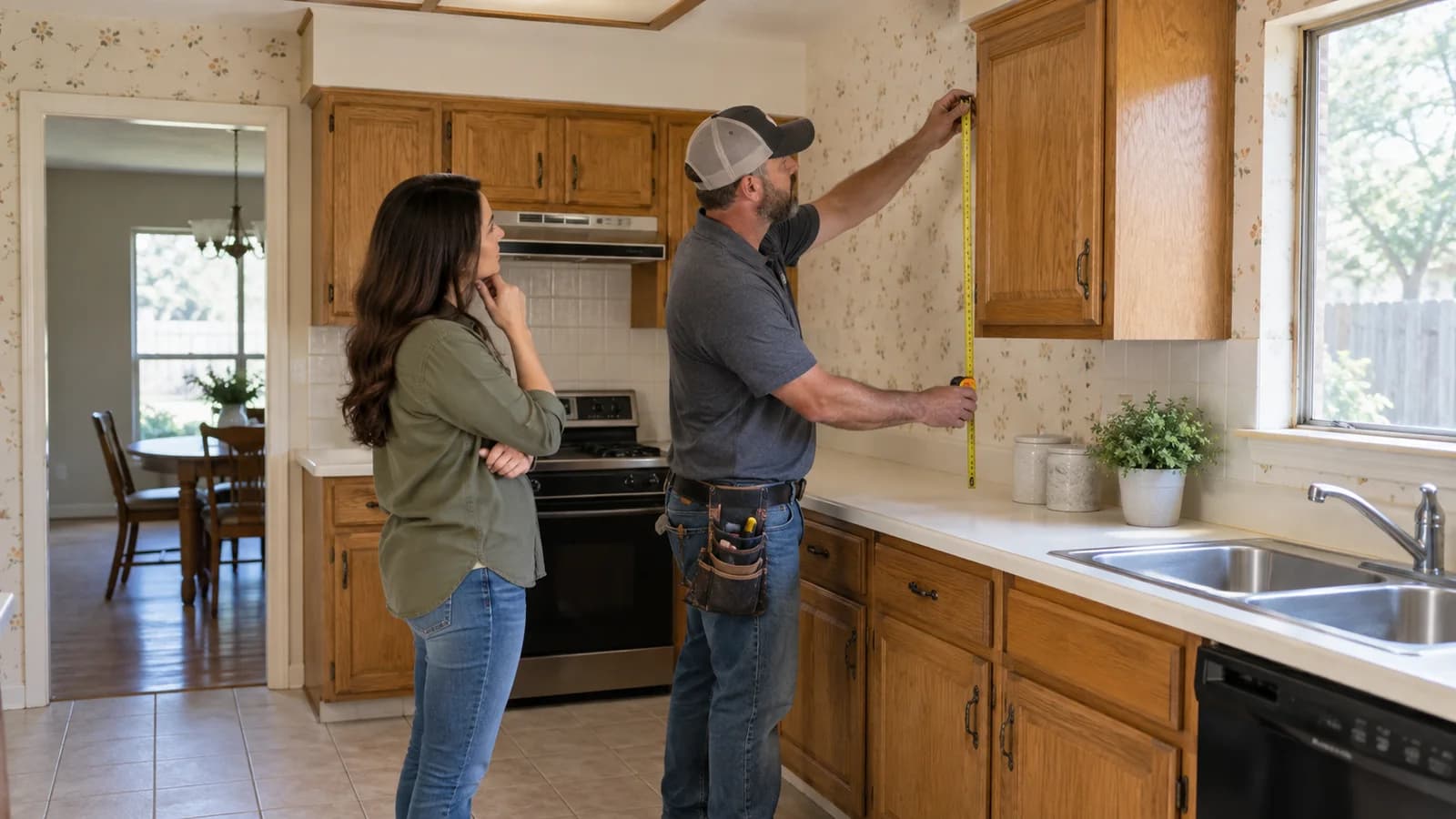
1. Inspect the house before you price the project
Texas-licensed inspectors work under TREC Standards of Practice. TREC describes a standard inspection as a limited visual survey and basic performance evaluation. It is not a comprehensive investigation behind walls or an exploratory probe to determine every cause or effect of a deficiency.
That matters more on a fixer-upper because the property may need specialist follow-up for structural, electrical, plumbing, roofing, HVAC, moisture, environmental, or other conditions outside a standard inspection's scope. Do not turn an inspection report into a repair budget by guessing.
Source: TREC Standards of Practice
2. Use the option period intentionally
TREC says the termination option is a negotiable contract term. When the buyer has the contractual option right, the buyer can use the option period to inspect the property and negotiate an amendment for repairs. The signed contract controls the actual rights and deadline.
Source: TREC option-period FAQ
3. Check permit history for major alterations
If the property is inside Dallas city limits, Dallas provides online permit-record research by address or permit number. It can help when you see an enclosed garage, addition, moved kitchen or bathroom, or major electrical or plumbing changes.
A missing online record is not proof by itself that work was illegal. Verify the age of the work, governing jurisdiction, and available records.
Source: City of Dallas permit records
Browser-only planning tool
Fixer-Upper Readiness Check
Choose what you know. Your answers stay in this browser and are not submitted to Amoni.
Before you decide
Answer the questions above. If every item is covered, review the supporting documents and deadlines before deciding.
4. Build the repair budget from real scopes
| Budget line | What belongs here |
|---|---|
| Immediate required work | Confirmed work needed for occupancy, safety, lender requirements, or major system function |
| Planned renovation | Improvements you choose to make |
| Professional / permit costs | Property-specific design, permits, engineering or specialty review |
| Temporary housing / storage | Only if the scope requires it |
| Contingency reserve | Cash for unknown conditions |
| Purchase closing costs | Keep separate from renovation spending |
Avoid a generic “Dallas fixer-upper costs $X per square foot” number. A dated kitchen and a structural rehabilitation are not the same project.
5. Compare financing structures
| Path | What to verify |
|---|---|
| Normal purchase financing + repair cash | Whether current condition satisfies the lender, and whether you have repair cash and reserve |
| FHA 203(k) Limited | Minor remodeling/non-structural repairs; current $75,000 rehabilitation cap for applicable current cases; no minimum; consultant optional |
| FHA 203(k) Standard | Larger remodeling/repairs; $5,000 minimum repair cost; 203(k) consultant required |
| Fannie Mae HomeStyle Renovation | Eligible renovations and the current renovation-cost limit based on acquisition cost versus as-completed appraised value |
| Cash purchase | Removes mortgage underwriting from the purchase, but not inspection, title, permit, insurance, repair, or resale risk |
Sources: HUD 203(k) guidance and Fannie Mae HomeStyle Renovation.
6. Keep the mortgage payment and renovation budget separate
A cheaper house can still be a more expensive project. Use Amoni's Mortgage Calculator for purchase-financing assumptions, then keep inspections, repairs, permits, contingency and temporary housing beside it as project cash.
7. Do not treat future value as guaranteed
After-repair value is still an estimate until the work is complete and the market supports it. Use relevant comparable sales, an appraisal where applicable, actual contractor scopes, realistic timing, and your risk tolerance. Do not use a single optimistic ARV as proof that a project is profitable.
8. Ask these questions before the final decision
- Which defects are confirmed?
- Which important conditions are still unknown?
- Which costs are based on written bids?
- Does the financing path work with this condition and scope?
- What happens if the project costs more or takes longer?
- Would you still want the house if the renovation adds less value than expected?
A simple Dallas fixer-upper process
- Tour the property and list visible work.
- Schedule inspection and important follow-up.
- Research major alteration and permit history.
- Get written repair bids.
- Confirm financing and property eligibility.
- Add a contingency reserve.
- Compare total purchase and project cost.
- Review contract deadlines before deciding.
Looking for DFW value-add properties?
Review available opportunities or join the buyers list.
Amoni does not guarantee condition, repair costs, financing, ARV, or future value. Buyers remain responsible for independent due diligence.
FAQs
Is FHA 203(k) only for major renovations?
No. HUD currently has Standard and Limited options with different scopes and requirements.
What is the current FHA 203(k) Limited rehabilitation cap?
Current HUD guidance says $75,000 for applicable current cases. Re-verify with an FHA-approved lender.
Does a normal inspection tell me what every repair will cost?
No. Use property-specific specialists and bids for cost decisions.
Should I check Dallas permit records?
For visible additions or major alterations, records can answer useful questions. A missing online record calls for more research, not an automatic conclusion.
How large should my contingency be?
There is no universal percentage. Base it on condition, findings, uncertainty, lender requirements, bids, and your risk tolerance.