

Dallas buyer due diligence · October 16, 2026
Make the survey answer a property question.
A survey is not a home inspection or a title policy. Use it beside the contract, title commitment and visible property so the right professional can address mismatches before closing.
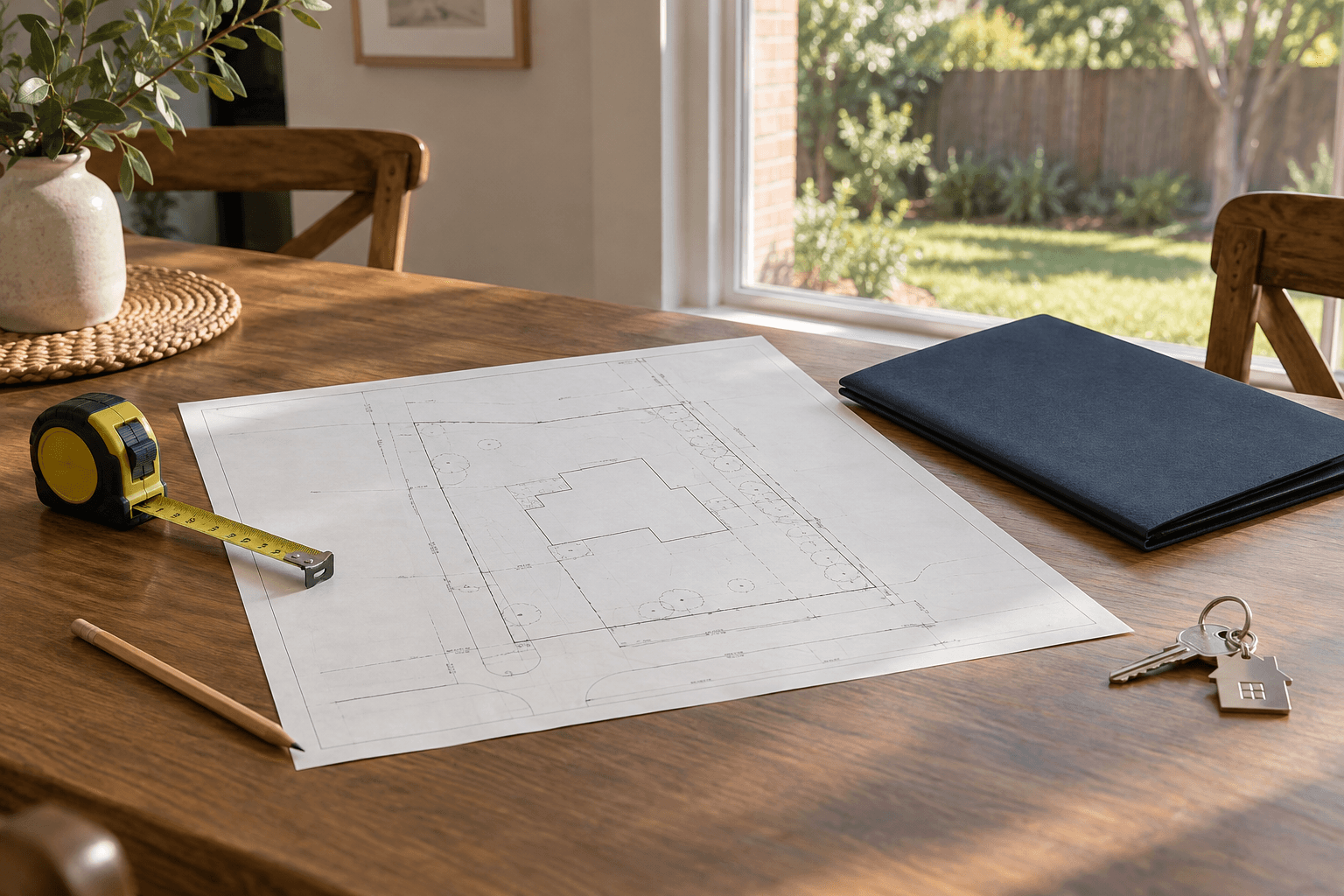
Quick answer
Before closing on a Dallas-area home, identify which survey was delivered, compare its legal description and drawing with the contract and property, and ask the title company and lender whether they accept it. Route a boundary, easement, access, encroachment or intended-use concern to the title agent, lender, registered professional land surveyor or Texas attorney as appropriate.
Do not assume an older survey is acceptable, that every visible improvement appears on it, or that a line on the page resolves a legal question. Your signed contract and transaction professionals control the timing and response.
Private review board
Five survey conversations to complete
Check an item only after the responsible professional has answered it for this property. Nothing is stored or sent.
0 of 5 reviewed
1. Start with the contract's survey choice
The current TREC One to Four Family Residential Contract (Resale) includes different survey paths. Paragraph 6C can call for delivery of an existing survey with a T-47 affidavit or T-47.1 declaration, a new survey, and negotiated responsibility for cost if an existing survey is not delivered or accepted. Read the option actually selected in your executed contract; a general guide cannot determine who must order or pay for a survey in your transaction. TREC resale contract form
2. Confirm identity before interpreting lines
Compare the property address, legal description, lot and block or metes-and-bounds description, survey date, surveyor certification and revision notes with the contract and title file. An address is useful for navigation, but the legal description identifies the land being conveyed. Ask the title company about any mismatch rather than deciding that two descriptions are equivalent.
TDI tells buyers to compare the title policy’s legal description with the survey and earnest-money contract before closing. The title-commitment guide explains how to keep proposed policy exceptions and closing requirements in a separate review lane. TDI title-insurance guidance
3. Compare the drawing with what is physically present
Look for the house footprint and visible additions, detached buildings, pools, fences, driveways and other improvements. Record a question when something appears new, absent or differently located; do not label it an encroachment or compliance problem yourself. A registered professional land surveyor can address survey work, while the city, title company, lender, inspector or attorney may answer different questions.
Keep condition findings separate. A survey does not establish whether a foundation, roof, drain, addition or pool is sound. Use the option-period guide to route inspection and specialist work under your actual contract deadlines.
4. Connect easements and building lines to your intended use
A line matters because of the right or restriction behind it, not because it looks close to a fence or house. If you plan a pool, addition, accessory building, new driveway or fence, identify the labeled easement or building line and request the recorded document when needed. Ask the appropriate professional what the instrument means for that specific project.
TDI advises checking the policy’s legal description and coverage, including limitations, exclusions, exceptions and special conditions. A survey and title commitment should be compared, but neither should be interpreted as a guarantee that a proposed project is permitted or buildable. TDI title FAQ
5. Ask whether the existing survey is acceptable
Delivery does not necessarily mean acceptance. The TREC form contemplates that the title company or lender may not accept an existing survey or related affidavit or declaration. Ask for a written status early enough to act under the contract, and keep any request for a new or updated survey with the closing file.
Do not calculate a survey deadline from this page. The signed contract, later amendments, title requirements and lender instructions can matter, and the people handling your transaction should identify the applicable dates.
6. Reconcile the final file before signing
Before closing, confirm which survey belongs in the final file, whether later changes were addressed, whether the title commitment changed and whether your lender or title company has an open requirement. Preserve the survey, title commitment and policy, contract, recorded instruments supplied, declarations and written answers together.
If the survey changes the amount of cash you expect to need—for example, because a new survey was ordered—reconcile the actual charge with the cash-to-close workflow. Never send closing funds from unverified emailed instructions.
Buyer next step
Name the document, line and decision.
For every unclear item, write the survey version, the label or location, the property plan it could affect, and the professional responsible for answering. That is more useful than a generic “survey looks fine” note.