
Dallas rental acquisition · October 19, 2026
Underwrite the sewer line as evidence, scope and access.
Keep seller records, camera findings, ownership responsibility, repair access and tenant disruption in separate lanes before buying a Dallas rental.
Quick answer
For a Dallas rental acquisition, identify the drain and sewer records, define a property-specific inspection scope, preserve footage and limitations, confirm who owns the relevant segment, and model repair access and tenant disruption separately from the base deal.
A camera image alone does not diagnose every plumbing problem, locate a legal boundary, assign responsibility, set a repair price or create a contract right.
Private review board
Five sewer-line questions to route
Check an item only after the responsible professional has answered it for this property. Nothing is stored or sent.
0 of 5 reviewed
1. Start with records, not a pipe-age shortcut
Ask for the current Seller's Disclosure Notice, plumbing invoices, cleanout or replacement records, permits, prior inspection footage, warranties and claim documents that actually exist. Compare addresses, dates and described scope. Do not infer present condition from pipe material or neighborhood age alone.
TREC describes its Seller's Disclosure Notice as containing information required about material facts and physical condition for covered previously occupied single-family sales. Read the disclosure supplied for this transaction and route an omission or conflict to the appropriate transaction professional. TREC Seller's Disclosure Notice
2. Define what the inspection can and cannot show
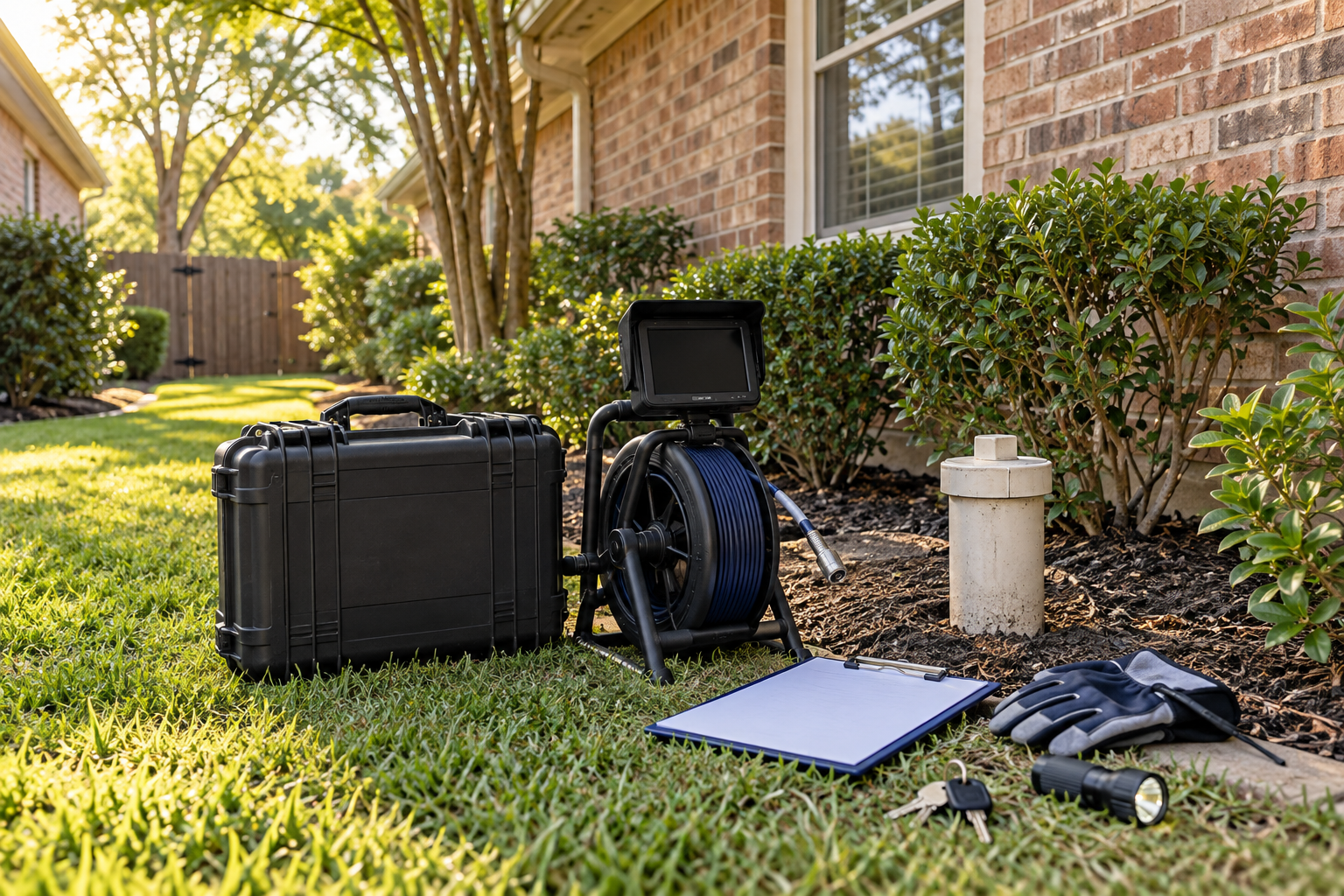
Ask the inspector or licensed plumber to document the access point, line segment reached, footage orientation, observed flow conditions, stoppages, inaccessible branches and whether locating or another test is separately recommended. Preserve the complete report and video—not just a screenshot.
TREC's hydrostatic-test addendum states that a seller can authorize a buyer, at the buyer's expense, to engage a licensed plumber to perform that specific test. It does not make a hydrostatic test automatic or interchangeable with a camera inspection. Use the signed contract and qualified advisers to determine authorization and timing. TREC hydrostatic-test addendum
3. Separate the private line from the public system
Identify which observed segment is on the property, in a shared arrangement, inside an easement or connected to public infrastructure. Ask Dallas Water Utilities, the title company, a licensed plumber or an attorney the question that fits their role; do not assign ownership from the camera path alone.
Dallas Water Utilities explains the service-line framework for water: the utility maintains the public side and meter, while the property owner is responsible for the private side and plumbing along the property from the meter. That water-service guidance is useful for asking ownership questions, but it does not by itself decide responsibility for a wastewater segment. Dallas Water Utilities service-line guidance
4. Build repair scenarios around access
Request written, property-specific scopes when findings warrant follow-up. Separate spot repair, cleaning, monitoring and broader replacement scenarios. Keep excavation or tunneling, slab or flooring restoration, landscaping, driveway access, permits, engineering, cleanup and contingency visible rather than hiding them in one plumbing allowance.
Then stress-test the expense in the Dallas rental analyzer. A scenario is not a quote or prediction; preserve the professional scope behind every number.
5. Model tenant and operating effects separately
For an occupied property, ask how investigation or repair could affect toilets, drains, water use, access, parking, landscaping and habitability. Review the lease, notices, vendor access, relocation or lost-rent assumptions with qualified property-management and legal professionals.
Keep this handoff beside the Dallas rental-registration checklist and property-manager review. Neither city registration nor a management proposal establishes pipe condition.
6. Reconcile the contract and closing file
Your signed contract and amendments control inspection, notice, negotiation, termination and closing rights. Ask your agent or attorney to identify the dates and written response path. Confirm who will complete agreed work, what evidence will be delivered, and whether the lender or insurer has separate conditions.
At closing, preserve the final report and footage, estimates, invoices, permits, warranties, amendments and any unfinished-work allocation. Record unresolved monitoring or maintenance tasks in the operational handoff.
Keep every sewer-line assumption traceable.
A useful acquisition file distinguishes a disclosed fact, observed finding, professional opinion, estimate, contract term and unknown.
View investment opportunities