

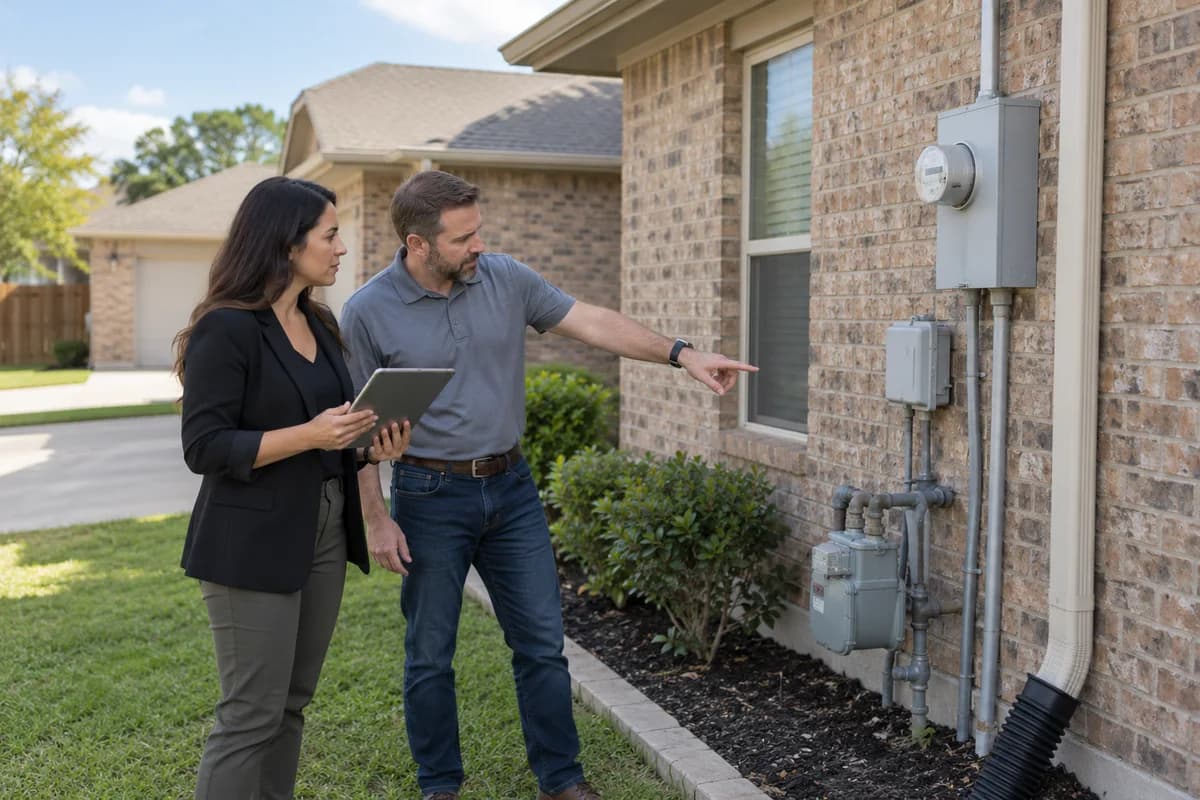
1. Confirm the property is actually inside Dallas city limits
This guide covers the City of Dallas program. A Dallas mailing address does not automatically mean every DFW property follows Dallas rules. Fort Worth, Plano, Arlington, Irving, Garland, and other municipalities can have different requirements.
Before using a Dallas checklist, verify the governing city for the property.
2. Know what Dallas currently requires for single-dwelling rentals
The City's Single-Family Rental Registration and Inspection Program covers rental single-family homes, duplex units and condominium units in Dallas. The current program page says owners must register annually.
Beginning October 1, 2025, the City says the annual process requires an online registration application, a $74 non-refundable fee for each dwelling or unit, and an Owner's Self Inspection Checklist with affidavit. The City also provides an exemption affidavit for situations that may qualify.
Source and reporting context: City of Dallas program page, reviewed October 2026. The City fee ordinance separately states $74 on or after October 1, 2025.
Why the source matters
Some older City pages and third-party articles still show earlier fee amounts. For an acquisition, use the current program page and controlling code or ordinance rather than copying a number from an older guide.
3. Ask for the registration and exemption history
Ask the seller or property manager for records they actually have: current registration confirmation, prior renewal information, any exemption affidavit, Owner's Self Inspection Checklist, City inspection reports, violation or reinspection notices, and Code Compliance correspondence.
Do not assume a missing document automatically means the property is in violation. Verify current status with the City.
Browser-only planning tool
Dallas Rental Acquisition Check
Choose what you know. Nothing is submitted to Amoni.
Before closing
Answer the questions to identify missing due-diligence steps.
This educational checklist does not determine an exemption, legal compliance, fines, tenant rights, or whether to buy.
4. Understand the City's inspection cycle
The current City program page says single-family rental properties are subject to a comprehensive City inspection at least once every five years and not more frequently than once a year under the routine program. Complaint-based inspections are not limited by that routine cycle.
Current registration alone does not answer every condition question. Ask about prior findings, unresolved notices, recent complaints or cases, and reinspection requirements. Then verify material items with the City and your own property inspection.
Source: City of Dallas program page
5. If the property is occupied, reconcile the tenant handoff
Buying an occupied rental adds another record set: the signed lease and amendments, rent ledger, security-deposit amount, move-in condition records, tenancy notices or agreements, and any property-management agreement.
Texas Property Code §92.105 says that when an owner's interest terminates by sale, the new owner is liable for return of the security deposit from the date title is acquired.
It also requires the new owner to deliver a signed statement acknowledging the acquisition and responsibility for the deposit and specifying its exact dollar amount. Subsection (c) provides a foreclosure-related exception for a real-estate mortgage lienholder that acquires title by foreclosure.
Source: Texas Property Code §92.105
The purchase and closing process should reconcile the actual deposit and records so the buyer is not relying on an assumption. Obtain transaction-specific legal and closing guidance.
6. Keep compliance due diligence separate from return assumptions
Registration does not tell you whether an investment is profitable. A property-specific analysis still needs rent, vacancy or credit loss, taxes, insurance, HOA, management, maintenance, capital expenditures, financing, turnover and acquisition cash.
Likewise, an attractive cap rate does not prove the City and tenant records are complete. Treat operations and economics as separate checks.
If financing the purchase, Amoni's Mortgage Calculator can organize payment assumptions. It is an educational estimate, not a loan quote.
7. Do not confuse single-dwelling rules with multi-tenant rules
Dallas also has a Multi-Tenant program with separate registration and inspection requirements. If you are buying an apartment or multi-tenant property, do not use the single-family, duplex and condominium checklist as if it were the governing program.
8. A simple acquisition checklist
| Before closing | Why it matters |
|---|---|
| Confirm city jurisdiction | Dallas rules apply only to properties governed by Dallas |
| Confirm property type and program | Single-dwelling and multi-tenant programs differ |
| Verify registration or exemption | Avoid relying on seller memory |
| Review City records | Registration alone does not show every open issue |
| Inspect independently | City status is not a substitute for buyer due diligence |
| Reconcile lease and deposit | Ownership changes create record responsibilities |
| Re-run economics | Compliance or repair findings can change cash needed |
9. Questions that should stop you from guessing
Get an answer before closing if the seller cannot show registration or exemption information, City status conflicts with seller records, the property type is unclear, notices remain unresolved, lease records do not match what you were told, the deposit is unclear, or underwriting assumes unpriced repairs or compliance costs.
You do not need an article to predict the answer. You need the missing record.
Looking for DFW investment opportunities?
Amoni Capital may make properties available to buyers and investors. Review opportunities or join the buyers list.
Complete your own inspection, title, lease, compliance, financing and financial due diligence before entering a transaction.
FAQs
Does every rental property in DFW use Dallas's registration program?
No. This article is specific to the City of Dallas. Other DFW cities can have different requirements.
What is the current Dallas single-family rental registration fee?
The current City program page and fee ordinance show $74 per single dwelling or unit on or after October 1, 2025. Verify the current fee at filing time.
How often does Dallas inspect single-family rental property?
The current City page says at least once every five years and not more than once per year under the routine program. Complaint-based inspections are separate.
Does current registration mean the property has no code issues?
Do not make that assumption. Review available City records and perform independent acquisition due diligence.
What happens to a tenant's security deposit when I buy the rental?
Section 92.105 says the new owner becomes liable for return of deposits from the date title is acquired and requires a signed notice acknowledging ownership, responsibility and the exact deposit amount. The statute contains a foreclosure-related exception. Use transaction-specific legal and closing guidance.
Is this the same as a landlord-law guide?
No. This is acquisition due diligence and does not summarize every Texas landlord-tenant rule.